Why the Best Builders Bring Us In at Framing
Every builder we work with in Tampa and Odessa has a story about the same phone call. The house is nearly finished. The paint is dry. The homeowner walks through, points at the back patio, and asks where the speakers are going. Or asks why there is no power near the pool deck for the television they already bought.
At that point, the answer is never simple. It means opening walls, pulling trim, cutting into finished surfaces, or running conduit somewhere nobody wants to look at it. The work gets done, but it costs more, takes longer, and rarely looks as clean as it should.
The builders who avoid that call are the ones who bring us in early. Not at trim. Not at final walkthrough. At framing, while the studs are open and the site is still flexible. This is when technology decisions cost almost nothing to make and almost nothing to change.
What Happens During Rough-In
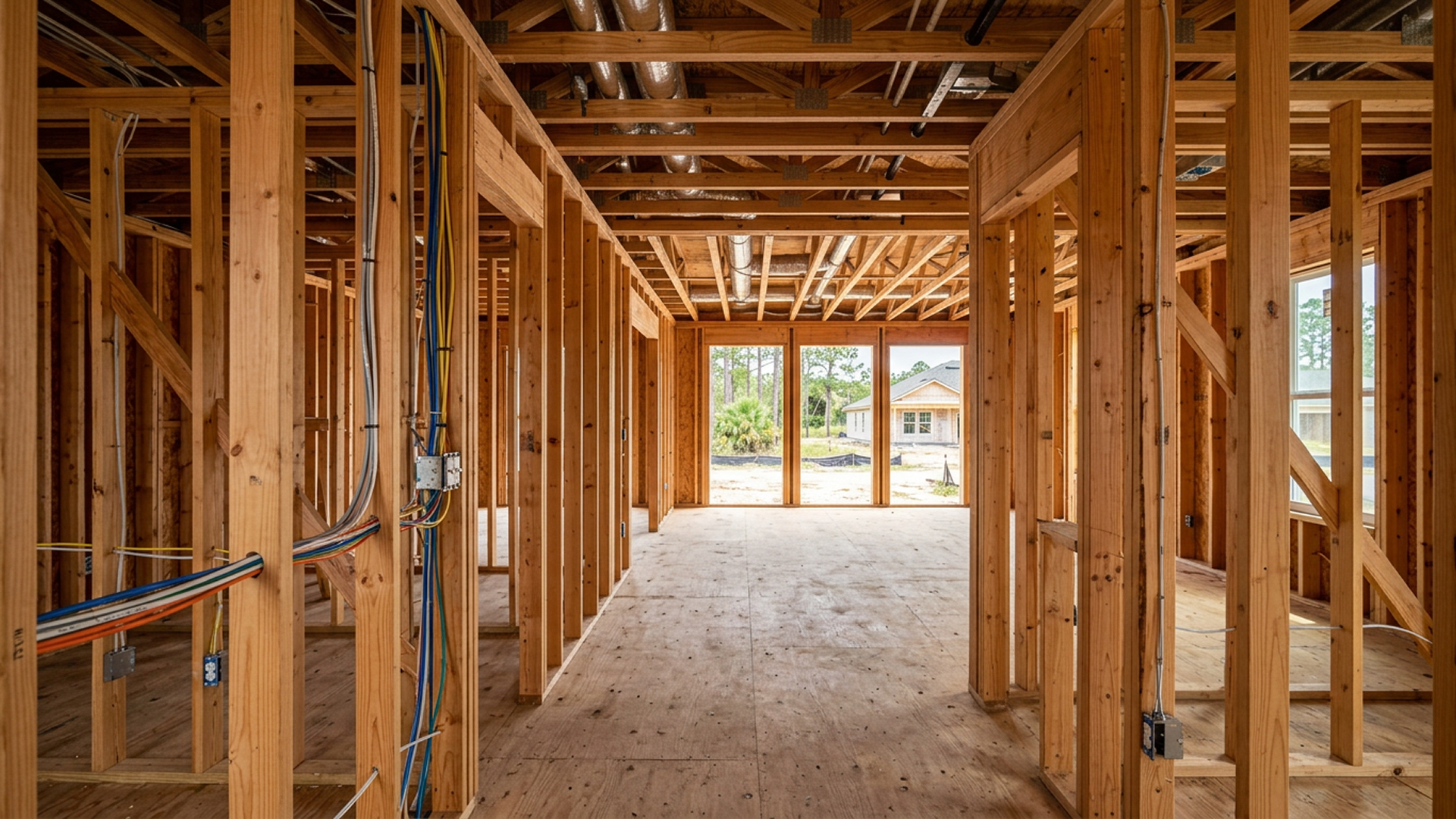
Rough-in is the window between framing and drywall. The studs are up, the roof is on, and every wall cavity in the house is still open. Electricians, plumbers, and HVAC crews are all working during this period for the same reason: it is the only time you can run anything through a wall without repairing it afterward.
Low-voltage wiring belongs in that same window. Speaker cable, network cable, camera runs, control wiring, and shade power all need a clear path from the equipment location to wherever they end up. Once drywall is hung, those paths are gone.
We plan our rough-in around your schedule, not the other way around. We show up when the framing is complete and inspected, we pull what the design calls for, we label everything, and we get out of the way of the next trade.
Wire Is Cheap. Opening a Finished Wall Is Not
This is the point that convinces most builders, and it is a simple one.
A run of network cable through an open stud bay costs very little in material and takes minutes to install. The same run after drywall means cutting access holes, fishing the cable blind, patching, sanding, priming, and matching paint. On a two-story home with a slab foundation, it may not be possible at all without surface-mounted conduit.
The difference is not small. A homeowner who spends a modest amount on extra wiring during framing may spend several times that amount for the same result after move-in, and still end up with a compromise. Pulling a few spare runs to likely locations is one of the cheapest forms of insurance in the entire build.
We would rather pull ten runs that never get used than have you explain to a client why the theater room cannot have proper surround sound.
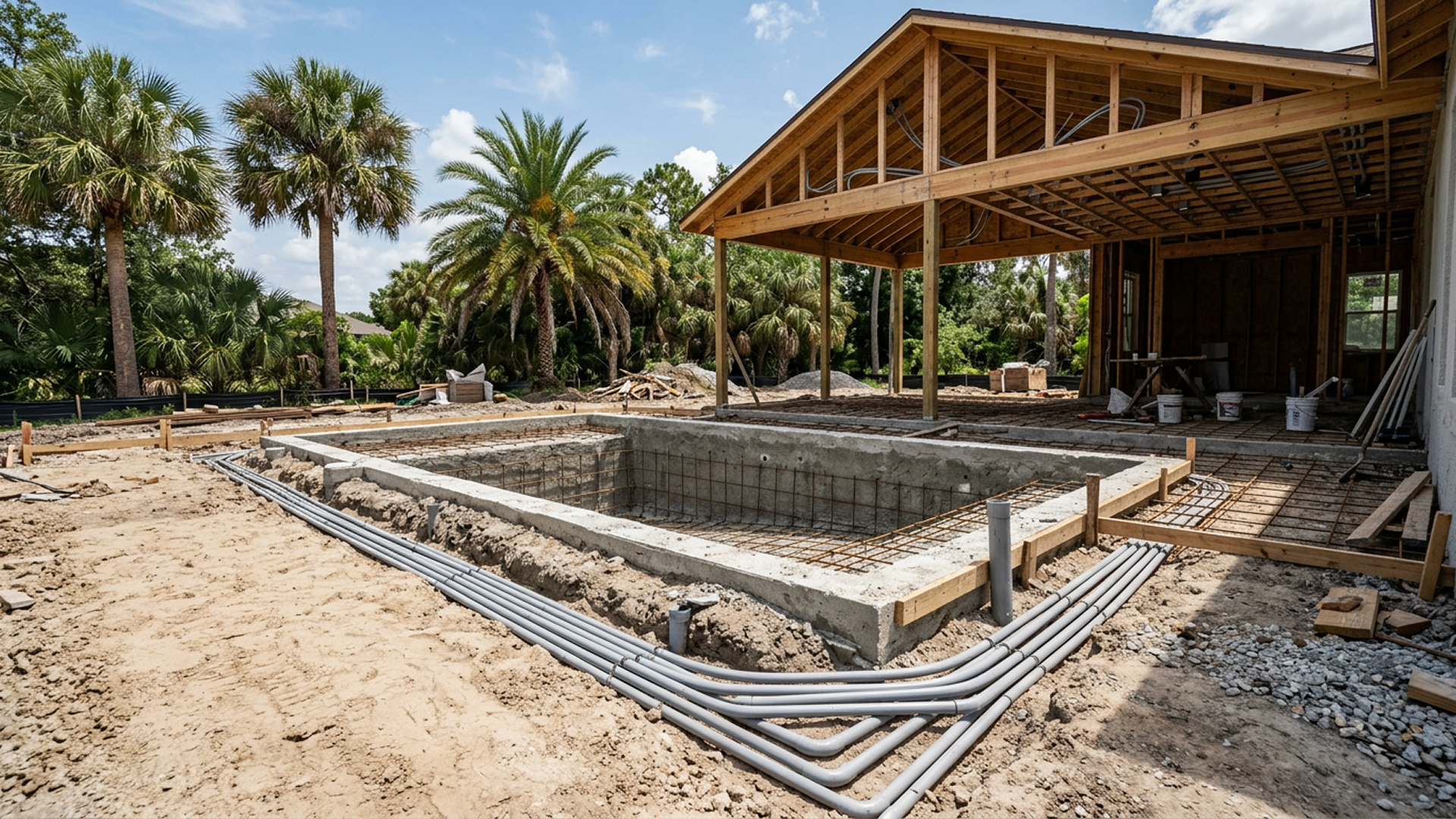
Outdoor Living Space Needs Even More Planning
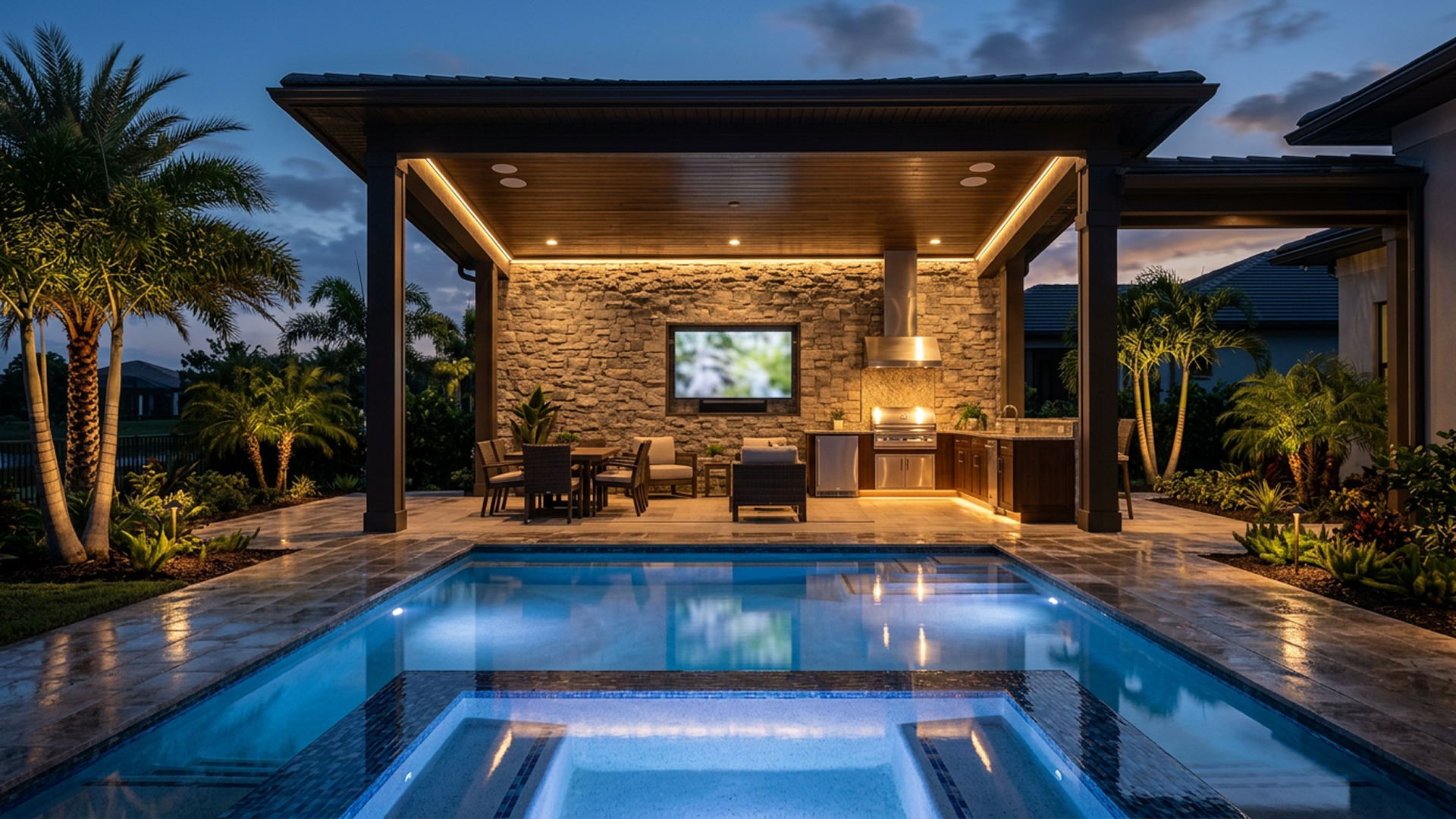
Most of the projects we work on in this area include a serious outdoor component. Covered lanais, summer kitchens, pool decks, fire features, and shaded seating areas are standard here, not extras.
Outdoor technology is harder to add late than indoor technology. Exterior walls are often block or stucco. Patios and pool decks get poured concrete and pavers. Landscaping goes in near the end. Every one of those elements makes a later cable run more difficult and more visible.
At framing, we can plan for things like:
- Speaker locations in soffits, ceilings, and landscape beds
- Weather-rated television placement with proper power and signal behind it
- Camera positions at corners, entries, and pool areas
- Landscape and architectural lighting circuits
- Wireless access points that actually reach the far end of the yard
- Control for motorised screens, shades, and pergola louvres
None of that works well as an afterthought. Planned early, it disappears into the architecture.
Pools and Hardscape Set Their Own Deadlines
Concrete is unforgiving. Once a pool deck is poured or pavers are set, adding a conduit sleeve means cutting and patching a surface the homeowner just paid a lot of money for.
We coordinate with pool builders and hardscape crews to get sleeves and conduit in place before anything is poured. That includes paths for pool equipment control, deck speakers, safety cameras, lighting, and any future run someone might want.
An empty sleeve under a deck costs almost nothing at the time it is installed. It is worth a great deal three years later when the homeowner decides they want an outdoor television or an upgraded pool automation panel.
Lighting, Shades, and Framing Decisions Overlap
Some technology choices are not really technology choices. They are framing choices.
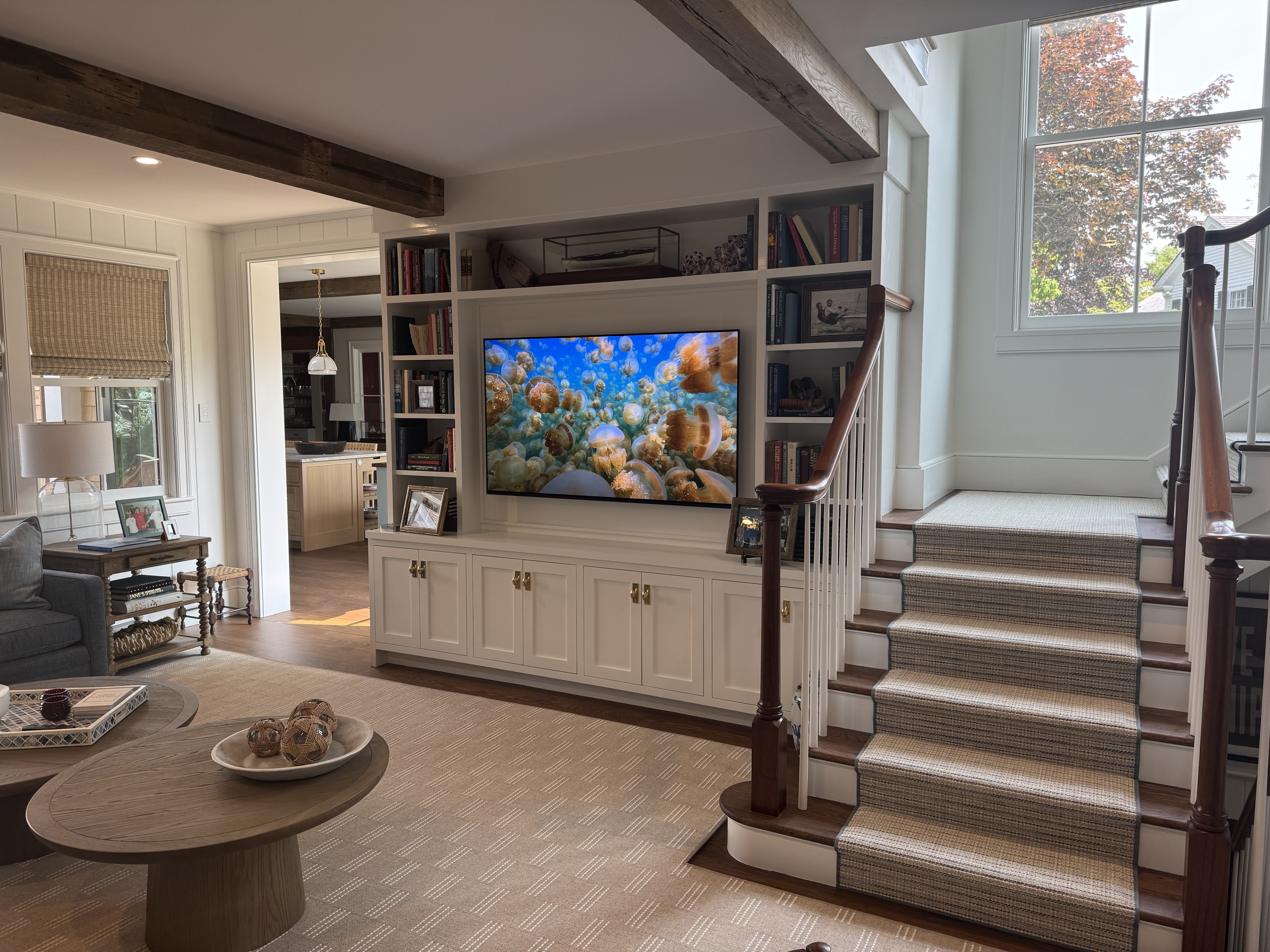
Motorised shades need a pocket, a header detail, and power at the right height. Recessed linear lighting needs the ceiling planned around it. In-ceiling speakers need clearance from joists and HVAC runs. A recessed television needs a backing box and a wall cavity deep enough to hold it.
All of these are easy decisions when the framer is still on site. They become expensive problems once the ceiling is closed and the mechanicals are set. Bringing us in during framing lets us walk the house with your team and flag these details while a small change is still a small change.
The Network Is the Part Nobody Sees
Almost everything in a modern home depends on the network. Cameras, streaming, control systems, thermostats, door locks, pool automation, and outdoor audio all rely on it. If the network is weak, the homeowner blames the house.
Good coverage is a physical problem before it is a technical one. It depends on where access points are mounted, what materials the signal has to pass through, and whether there is a cable run to each location. Block walls, metal roofing, and long lot lines all affect the answer.
We plan access point locations, cable paths, and a proper equipment location during rough-in. That means a central rack or closet with power, ventilation, and enough room to service the gear later. A closet that is six inches too shallow is a problem that follows everyone for years.
Fewer Change Orders and Fewer Callbacks
From a builder's side, the practical benefit is a quieter project.
When technology is planned at framing, the homeowner sees the plan early and makes decisions early. There are fewer surprise requests during trim. There are fewer moments where a client asks for something that no longer fits the schedule or the budget. And there are fewer callbacks after closing, because the infrastructure supports what the client wants to add later.
We document what we install. Your client gets a clear record of what is in the walls, which helps them and helps you if a question comes up down the road.
How We Work With Builders on Site
We treat your schedule as our schedule. Our goal is to be a trade that does not create delays for anyone else.
That usually looks like this:
- A design meeting before or during framing, with plans in hand
- A walkthrough with your superintendent to confirm locations
- Rough-in wiring pulled, labelled, and photographed before drywall
- Coordination with the electrician on power and equipment locations
- Trim and equipment installation timed with your finish schedule
- A final walkthrough and handoff with the homeowner
We are used to working around other trades and adjusting when a plan changes on site. Building is unpredictable. We plan for that.
Key Takeaways
- Framing is the only stage where wiring can be added at almost no cost
- Extra cable runs are inexpensive insurance against future rework
- Outdoor spaces need earlier planning than interiors, not later
- Conduit sleeves must go in before concrete and hardscape are set
- Shades, lighting, and recessed displays are framing decisions as much as technology decisions
- Network planning affects everything the homeowner will use daily
- Early involvement means fewer change orders and fewer post-closing callbacks
Let's Talk Before the Drywall Goes Up
If you have a project in the framing stage, or one that is about to break ground, this is the right time to talk. A short conversation now can save your client real money and save your team a difficult conversation later.
We work with builders throughout Tampa, Odessa, and the surrounding communities on outdoor living spaces, custom pool areas, and smart home technology. Contact MVIS to schedule a site walkthrough, and we will bring a plan that fits your build and your timeline.