Transform Your Evenings with Smart Home Lighting Integration
Evenings are often the most important part of the day. After work, school, or busy schedules, homeowners look forward to relaxing, spending time with family, and enjoying their living space. Yet small daily tasks, adjusting lights, managing entertainment, setting the right mood, can interrupt that sense of comfort. This is where smart home integration begins to make a real difference.
With intelligent lighting and automated control, your home can respond naturally to your evening routine. Lights can gradually soften as the sun sets, creating a calm and welcoming atmosphere. At the same time, music, temperature, and shading can adjust automatically to match how you live. Instead of managing devices one by one, everything works together in the background.
Professionally designed smart home systems help create a smoother transition from daytime activity to nighttime relaxation. Homeowners who explore solutions like smart home lighting integration often discover that comfort is not just about technology, it is about creating a space that supports everyday living in a simple and intuitive way.
Key takeaway: Smart home integration helps transform busy evenings into calm, comfortable experiences through automated lighting and intelligent control.
Quick to Know
Smart home integration can make evening routines easier and more comfortable. Automated lighting scenes help create the right mood without manual adjustments. With one touch or scheduled settings, homeowners can relax faster and enjoy their space more naturally.
Integrated systems also improve energy efficiency by adjusting brightness and device usage based on real needs. This means better comfort while reducing unnecessary energy consumption.
From family movie nights to quiet reading time, smart lighting supports different activities with smooth transitions. The result is a living environment that feels intuitive, welcoming, and ready for everyday life.
Key takeaway: Smart lighting automation simplifies evening routines while improving comfort and energy efficiency.
Smart home lighting brings practical advantages that homeowners can feel every evening. Instead of adjusting switches and settings manually, integrated systems create a smooth and comfortable environment automatically.
Creates relaxing lighting scenes for different evening activities
Saves time by automating daily routines
Helps reduce energy usage with intelligent brightness control
Improves comfort through seamless device integration
Enhances the overall atmosphere of living spaces
Q/A
Q: Do I need advanced technical knowledge to use smart home lighting?
No. Most systems are designed to be simple and user-friendly. Once installed and configured, lighting scenes can run automatically or be controlled with an app or a single button.
Q: Can smart lighting really improve my evening comfort?
Yes. By adjusting brightness and color temperature, smart lighting helps create a calm atmosphere that supports relaxation and family time.
Q: Is smart home integration suitable for both small and large homes?
Absolutely. Smart lighting solutions can be scaled to match different home sizes and lifestyle needs.
Key takeaway: Smart home lighting systems are designed to be simple, flexible, and suitable for any home environment.
Creating the Perfect Smart Evening Environment at Home
A smart evening experience begins with the idea that your home should support your lifestyle without constant manual control. Smart home integration connects lighting, shading, climate, and entertainment into one coordinated system. This allows your living space to respond naturally as the day turns into night.
For example, lights can slowly dim to create a softer atmosphere while window shades close automatically for privacy. At the same time, background music can start playing in shared spaces, helping family members transition from busy daily activities to a more relaxed mood. These small automated changes work together to create a sense of comfort and balance throughout the home.
Smart lighting also supports different evening scenarios. Bright, focused lighting can help with homework or cooking, while warmer tones can transform the same space into a cozy environment for watching movies or spending time with guests. With personalized scenes, homeowners can easily switch between activities without interrupting the flow of their routine.
To better understand how integrated solutions can fit your lifestyle, you can explore practical design ideas through smart home automation planning. Professional system design ensures that every element works smoothly together, creating an evening environment that feels natural and effortless.
Key takeaway: Coordinated smart home systems help create a smooth and comfortable transition from daytime activity to relaxed evening living.
Creating a smart evening environment is about combining comfort, simplicity, and personalized control. Integrated lighting scenes help homeowners shift smoothly from active daytime routines to relaxed nighttime moments.
Supports natural transitions from work or school to relaxation
Adapts lighting levels for different evening activities
Enhances privacy and atmosphere with automated shading
Keeps home environments calm, balanced, and intuitive
Reduces the need for constant manual adjustments
Key takeaway: Smart lighting integration helps homeowners maintain comfort and balance throughout their evening routine.
How Smart Lighting Supports Real Evening Routines
In real life, evening routines can look very different from one home to another. Some families focus on shared time in the living room, while others move between cooking, studying, and relaxing in separate spaces. Smart home lighting makes it easier to support all these activities without creating stress or interruptions.
For example, when a homeowner arrives home after sunset, entry lights can turn on automatically to create a welcoming first impression. In the kitchen, brighter task lighting can help with meal preparation, while the dining area can shift to warmer tones during dinner. Later in the evening, a single command can dim lights across the home and activate a “movie night” scene that adjusts brightness, shading, and entertainment settings at the same time.
Parents often find smart lighting especially useful for children’s routines. Gentle night lighting in hallways or bedrooms can help create a calm environment for bedtime. At the same time, automated schedules ensure that lights turn off gradually, supporting healthy sleep habits without sudden changes.
To see how tailored automation can match your household rhythm, reviewing ideas from smart living solutions can help homeowners plan realistic and comfortable evening experiences.
Key takeaway: Smart lighting adapts to real evening routines, helping homeowners move naturally between activities while maintaining comfort and simplicity.
Q/A
Q: Can smart lighting adjust automatically every evening?
Yes. Homeowners can set schedules based on sunset times or daily routines. This allows lights to change gradually without needing manual control.
Q: Will automation still allow manual adjustments when needed?
Of course. Smart systems are flexible, so you can always adjust lighting through a wall keypad, mobile app, or voice command whenever preferences change.
Q: Does smart home lighting help improve home security at night?
Yes. Automated lighting can simulate occupancy or activate pathway lighting, making the home feel safer and more secure after dark.
Key takeaway: Smart lighting offers both automation and flexibility, supporting comfort, convenience, and security during evening hours.
Understanding the Technology Behind Smart Lighting Automation
Behind every comfortable smart evening is a well-designed system that connects lighting hardware, control interfaces, and automation software. Smart lighting works through networked switches, dimmers, sensors, and centralized controllers that communicate in real time. This allows different parts of the home to respond together instead of operating as separate devices.
Modern systems often include motion sensors and ambient light sensors. These components help lighting adjust automatically based on activity levels or natural light conditions. For example, hallway lights can turn on softly when movement is detected at night, improving safety while maintaining a calm atmosphere. At the same time, adaptive dimming ensures that brightness levels remain consistent and energy efficient.
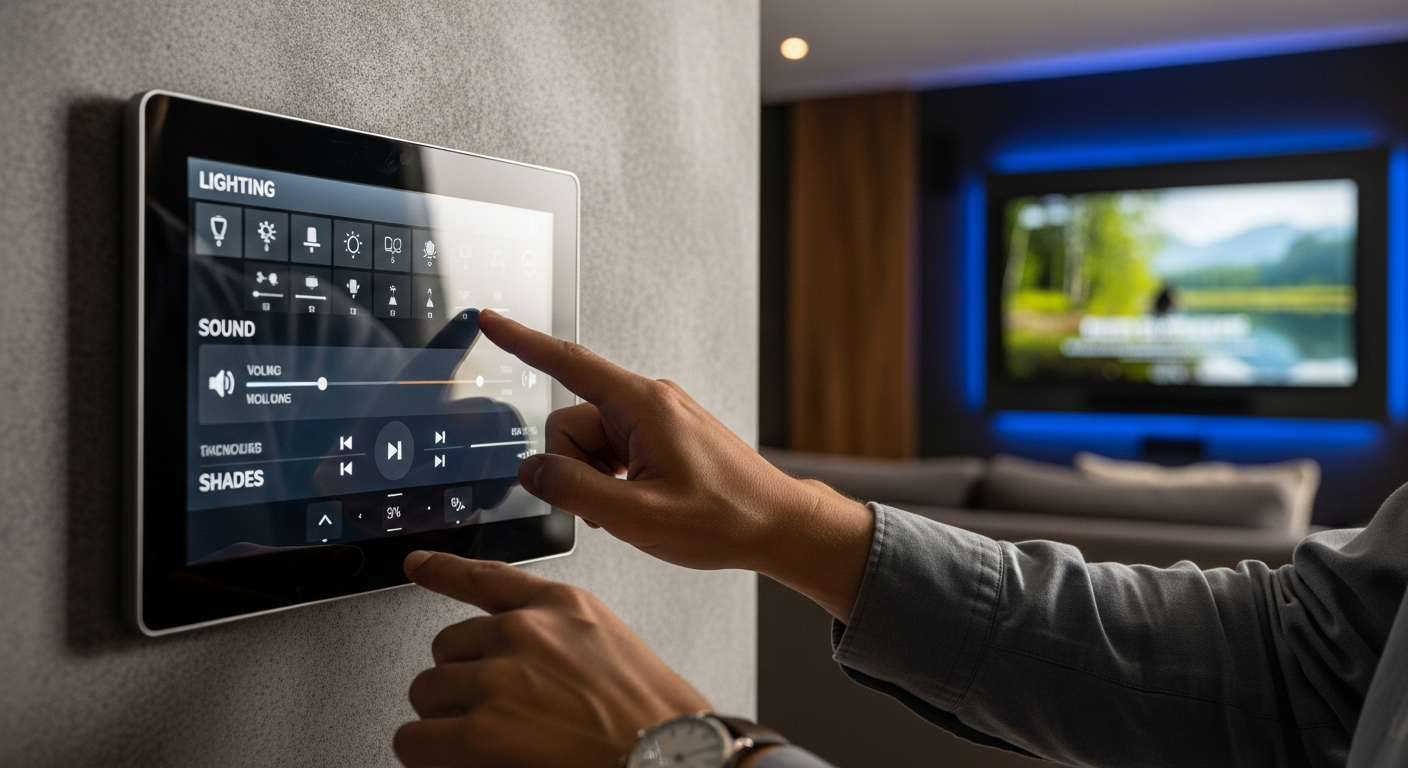
User control is also an important technical element. Wall keypads, mobile apps, and voice assistants provide multiple ways to manage lighting scenes. Homeowners can create personalized settings for reading, entertaining, or relaxing, and switch between them instantly. With professional installation and system configuration from providers like integrated smart home specialists, the technology becomes easy to use and reliable over time.
Key takeaway: A well-planned technical setup ensures that smart lighting automation remains responsive, energy efficient, and simple to control.
Understanding the technical side of smart lighting helps homeowners see how automation supports everyday comfort. When lighting, sensors, and control systems work together, the home becomes more responsive and efficient.
Connects switches, dimmers, and sensors into one coordinated system
Allows instant scene changes through apps, keypads, or voice control
Improves safety with motion-activated pathway lighting
Maintains consistent brightness and energy efficiency
Ensures reliable performance with professional system design
Key takeaway: A strong technical foundation makes smart lighting automation dependable, flexible, and easy to manage each evening.
Future-Ready Smart Living: Expert Tips for Comfortable Evenings
As smart home technology continues to evolve, evenings at home are becoming more personalized and intuitive. Experts recommend starting with lighting automation as a foundation, since it influences mood, comfort, and daily rhythm more than most other systems. By designing lighting scenes that match real routines, homeowners can enjoy technology that feels supportive rather than complicated.
Another important tip is to plan flexibility for the future. Smart homes should be designed to grow with changing needs, whether that means adding outdoor lighting, integrating new entertainment features, or improving energy monitoring. Choosing scalable solutions helps ensure that your evening comfort today can expand into a more connected lifestyle tomorrow
Future trends also point toward deeper integration with wellness features. Lighting systems are increasingly able to adjust color temperature and brightness in ways that support relaxation and healthy sleep patterns. Combined with automated shading and quiet background audio, these features create living spaces that respond naturally to how people feel at the end of the day.
Homeowners exploring long-term comfort strategies can learn more by reviewing ideas from smart home lifestyle planning, where integrated solutions are designed to balance technology, design, and everyday living.
Key takeaway: Planning flexible, wellness-focused smart lighting systems helps homeowners enjoy more comfortable and future-ready evening living.
Q/A
Q: Is smart lighting a good long-term investment for homeowners?
Yes. Professionally integrated systems can improve daily comfort, increase energy efficiency, and add value to the home over time.
Q: Can smart lighting support wellness and better sleep habits?
Modern systems can adjust brightness and color temperature in the evening, helping create a calm environment that supports relaxation and healthy routines.
Q: What should homeowners consider before installing smart lighting?
It is important to think about lifestyle needs, room usage, and future expansion. Working with experienced integrators helps ensure the system is designed for both present comfort and future upgrades.
Key takeaway: Thoughtful planning and professional guidance help homeowners gain lasting benefits from smart lighting integration.
Smart home integration can transform evening routines into smoother, more comfortable experiences. By combining lighting automation with intuitive control, homeowners can create living environments that feel calm, efficient, and ready for relaxation.
Automated lighting scenes help shift the home from active daytime use to peaceful evening living
Warm, adjustable lighting tones support comfort during family time, dining, or entertainment
Integrated systems reduce the need for manual adjustments and simplify daily routines
Motion sensors and adaptive dimming improve safety and energy efficiency after sunset
Personalized controls allow quick changes for activities like reading, movie nights, or hosting guests
Smart lighting schedules can support healthier sleep habits by creating gradual transitions at night
Scalable technology ensures that evening comfort can grow with future smart home upgrades
Professional system design helps maintain reliability and ease of use over time
Key takeaway: Smart home lighting integration brings together comfort, efficiency, and flexibility to enhance everyday evening living.
Your evenings should feel calm, welcoming, and effortless. With professionally designed smart home lighting and automation, you can create a living environment that naturally supports relaxation, family time, and everyday comfort. Instead of managing multiple devices, your home can respond automatically to your routine and preferences.
At MVIS (Martha’s Vineyard Integrated Systems), we help homeowners design smart living spaces that balance technology with lifestyle. From initial planning to seamless installation and long-term support, our team focuses on creating solutions that feel simple and reliable. Whether you are upgrading an existing system or starting a new project, thoughtful integration can make a meaningful difference in how you experience your home each evening.
If you are ready to explore how smart lighting can transform your daily routine, the next step is easy. Contact us today to start planning your smart home experience.